Los Angeles: Researchers at Children’s Hospital Los Angeles have demonstrated that
adolescents and young adults with congenital adrenal hyperplasia (CAH)
have significantly increased amounts of abdominal fat tissue, placing
them at greater risk for harmful conditions linked to obesity, including
cardiovascular disease (CVD).
Only good, independent and reliable information about health from experts.
Showing posts with label adrenal gland. Show all posts
Sunday, June 14, 2015
Thursday, October 2, 2014
Pheochromocytoma
Pheochromocytoma is a rare tumor that usually starts in the cells of one of your adrenal glands (glands on top of the kidneys).
Their frequency is about 0.1% in patients with hypertension and 4% in patients with a fortuitously discovered adrenal mass.
The cause is unknown although valuable information has recently been provided by work on the genomics of familial diseases including these tumors.
Although they are usually benign, pheochromocytomas often cause the adrenal gland to make too many hormones (dopamine, epinephrine and norepinephrine). This can lead to high blood pressure, diabetes and cause symptoms such as
Doctors use lab tests and imaging tests to diagnose it.
The purpose of pre-operative imaging tests is to locate the tumor, ascertain whether it is single or multiple, adrenal or ectopic (outside the adrenal gland), benign or malignant, and isolated or present with other neoplasms (tumors) in the context of familial syndromes.
Surgery is the most common treatment. Other options include radiation therapy, chemotherapy, and targeted therapy. Targeted therapy uses substances that attack cancer cells without harming normal cells.
Source: Orphanet Journal of Rare Diseases
Their frequency is about 0.1% in patients with hypertension and 4% in patients with a fortuitously discovered adrenal mass.
The cause is unknown although valuable information has recently been provided by work on the genomics of familial diseases including these tumors.
Although they are usually benign, pheochromocytomas often cause the adrenal gland to make too many hormones (dopamine, epinephrine and norepinephrine). This can lead to high blood pressure, diabetes and cause symptoms such as
- Headaches
- Sweating
- Pounding of the heart (palpitations)
- Being shaky
- Being extremely pale
- Weight loss
Doctors use lab tests and imaging tests to diagnose it.
The purpose of pre-operative imaging tests is to locate the tumor, ascertain whether it is single or multiple, adrenal or ectopic (outside the adrenal gland), benign or malignant, and isolated or present with other neoplasms (tumors) in the context of familial syndromes.
Surgery is the most common treatment. Other options include radiation therapy, chemotherapy, and targeted therapy. Targeted therapy uses substances that attack cancer cells without harming normal cells.
Source: Orphanet Journal of Rare Diseases
Sunday, August 31, 2014
Catecholamine-producing tumors
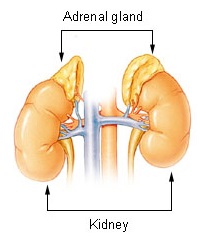
Source: Pr Anne-Paule GIMENEZ-ROQUEPLO MD; Pr Pierre-François PLOUIN MD. Orphanet
Catecholamine-producing tumors may arise in the adrenal gland (pheochromocytomas) or in extraadrenal chromaffin cells (secreting paragangliomas).
Subscribe to:
Posts (Atom)

