Showing posts with label microbiome. Show all posts

Sunday, March 21, 2021

Melanoma patients respond to immunotherapy after changes to gut microbiome

Oregon State University : Statistical modeling developed by Oregon State University researchers has confirmed that changes to melanoma patients’ gut microbiome led them to respond to a type of treatment capable of providing long-term benefit.

Findings were published in Science.

The modeling technique invented by Andrey Morgun of the OSU College of Pharmacy and Natalia Shulzenko of Oregon State’s Carlson College of Veterinary Medicine is known as transkingdom network analysis.
Saturday, June 30, 2018

Antibiotics before birth and in early life can affect long-term health

TheConversation: Half of Australian infants have received at least one course of antibiotics by their first birthday. This is one of the highest rates of antibiotic use in the world. Although antibiotics are effective and potentially life-saving for bacterial infections in children, they are often prescribed for viral infections, for which they are ineffective. Unnecessary antibiotics expose individual children to potential side effects, including diarrhoea, vomiting, rashes and allergic reactions. The overuse of antibiotics also increases the risk of bacterial resistance in the wider community. This is when commonly used antibiotics become ineffective against some bacteria, making it difficult, or even impossible, to treat some infections.

Wednesday, May 23, 2018

Could doctors one day prescribe a specific diet to prevent the spread of breast cancer?

Researcher Melanie Rutkowski, PhD, from University of Virginia can envision a day when doctors prescribe a specific diet to prevent the spread of breast cancer. A day when doctors could identify women at high risk for breast tumors just by examining the bacteria in their guts. And now Susan G. Komen has awarded her $450,000 to fund pioneering research that could make that happen. Over the next three years, the grant will let Rutkowski, of the University of Virginia School of Medicine, expand our understanding of the relationship between the microbiome – the microorganisms that naturally live in our bodies – and the immune system’s response to breast cancer. She will seek to determine if chronic disruption of the microbiome, possibly caused by diets heavy in processed foods, fats and sugar, is hurting the immune system’s ability to battle breast tumors – and perhaps even facilitating the cancer’s spread through the body.

Wednesday, May 16, 2018

Microbiome Influences Brain’s Immune Cells in a Sex and Age-dependent manner

INSERM: A joint study conducted by Inserm researchers from IBENS (Institute of Biology of the Ecole Normale Supérieure – Inserm/CNRS/ENS) in Paris and researchers from SIgN (Singapore Immunology Network, A*STAR) in Singapore reveals a hitherto undiscovered impact of microbiota on immune brain cells, occurring from fetal stages. These cells, called microglia, which are known players in brain development and functioning, differentially respond to microbiome perturbations in male or female mice. These results are published in Cell.

Wednesday, May 2, 2018

Gut microbes influence severity of intestinal parasitic infections

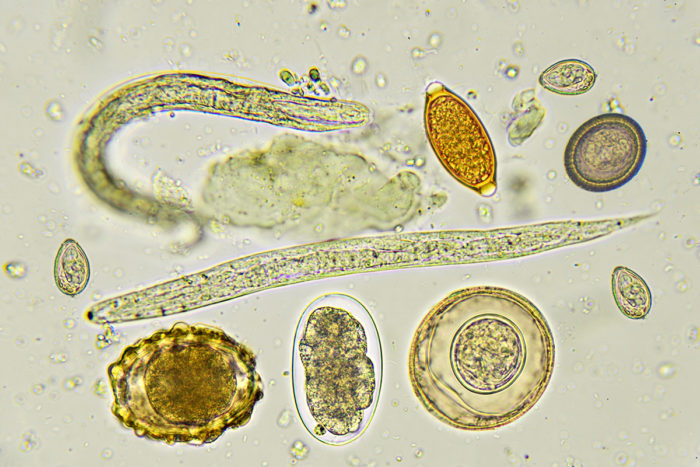
Washington University: A new study indicates that the kinds of microbes living in the gut influence the severity and recurrence of parasitic worm infections in developing countries. The findings, by researchers at Washington University School of Medicine in St. Louis, suggest that manipulating the gut’s microbial communities may protect against intestinal parasites, which affect more than 1 billion people worldwide. The study appears online in the journal Microbiome.

Saturday, April 28, 2018

Effects of gut flora revisited

EMBO: An unhealthy diet changes the composition of the gut flora and it is generally assumed that this maladaptation called “dysbiosis” triggers disease. A study by Matteo Serino and his colleagues at the Université Paul Sabatier in Toulouse, France, now challenges this view. Using mice as a model organism, the researchers show that dysbiosis may have beneficial effects on liver metabolism and may protect against metabolic disease. The study is published today in Molecular Systems Biology.

Wednesday, April 18, 2018

Gut bacteria and human cells are linked in a social network

Oregon State University: In our intestines, billions of microbes live together like the residents of a teeming metropolis. They occupy neighborhoods and meet on the streets, back alleys and cul-de-sacs of our digestive networks. They even communicate with a kind of microbial Facebook. They function in a symbiotic relationship with each other and with our own cells. In the past decade, scientists have discovered how important these bugs are in digesting our food, building our immune systems, maintaining stable glucose levels and other jobs that are critical to good health.

Wednesday, April 4, 2018

Social Stress Leads To Changes In Gut Bacteria, Study Finds

Georgia: Exposure to psychological stress in the form of social conflict alters gut bacteria in Syrian hamsters, according to a new study by Georgia State University. It has long been said that humans have “gut feelings” about things, but how the gut might communicate those “feelings” to the brain was not known. It has been shown that gut microbiota, the complex community of microorganisms that live in the digestive tracts of humans and other animals, can send signals to the brain and vice versa.

Monday, February 27, 2017

Scientists monitor crosstalk between intestinal microbes and immune system

Harvard: The human gut is home to some 100 trillion bacteria, comprising between 250 and 500 species. This astounding array of organisms, collectively known as the gut microbiome, is a powerful regulator of disease and health and has been implicated in conditions ranging from inflammatory bowel disease to multiple sclerosis. Gut microbes engage in an intricately choreographed conversation with the immune system, stimulating it just enough to keep disease-causing invaders at bay, while at the same time reining it in so it doesn’t mistakenly launch an attack on the body.

Saturday, February 18, 2017

Gut bacteria may play a role in Alzheimer’s disease

Lund: New research from Lund University in Sweden has shown that intestinal bacteria can accelerate the development of Alzheimer’s disease. According to the researchers behind the study, the results open up the door to new opportunities for preventing and treating the disease. Because our gut bacteria have a major impact on how we feel through the interaction between the immune system, the intestinal mucosa and our diet, the composition of the gut microbiota is of great interest to research on diseases such as Alzheimer’s. Exactly how our gut microbiota composition is composed depends on which bacteria we receive at birth, our genes and our diet.

Thursday, February 16, 2017

Scientists identify mechanisms behind harmful changes in the gut’s bacterial balance during inflammation

Dallas: A study led by UT Southwestern Medical Center researchers has uncovered key molecular pathways behind the disruption of the gut’s delicate balance of bacteria during episodes of inflammatory disease. “A deeper understanding of these pathways may help in developing new prevention and treatment strategies for conditions such as inflammatory bowel disease (IBD) and certain gastrointestinal infections and colorectal cancers,” said Dr. Sebastian Winter, Assistant Professor of Microbiology and a W.W. Caruth, Jr. Scholar in Biomedical Research at UT Southwestern, who led the study.

Friday, December 23, 2016

The Microbiome and Risk for HIV

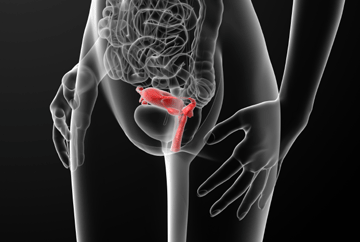
Columbia: Mailman School Epidemiology Professor Salim Abdool Karim had a question: why were young women in Africa at higher risk of acquiring HIV infection than young men? Studies conducted by the Mailman School–affiliated Centre for the AIDS Program of Research in South Africa (CAPRISA) showed that women aged 15 to 24 in that country are upward of four times more likely to be infected with HIV than their male counterparts. Analyzing data from a clinical trial of a vaginal microbicide, Karim, director of CAPRISA, and his immunology team found that vaginal inflammation accurately predicted which women would get infected with HIV. The finding raised another important question: what was behind the inflammation that was putting women at risk for HIV?

Wednesday, December 14, 2016

Guts and rhythms: Disrupting daily routine of gut microbes can be bad news for whole body

TheConversation: We’ve known that bacteria live in our intestines as far back as the 1680s, when Leeuwenhoek first looked through his microscope. Yogurt companies use that information in the sales pitch for their product, claiming it can help keep your gut bacteria happy. The bacteria growing on our skin have also been effectively exploited to sell the underarm deodorants without which we can become, ahem, malodorous. Until fairly recently our various microbes were thought of as freeloaders without any meaningful benefit to our functioning as healthy human beings. However, that view has changed in a big way over the last couple of decades.

Friday, November 25, 2016

The brain and the microbiome

Hutch: Dr. Meredith Hullar is a microbial ecologist at Fred Hutch who got her start at Harvard studying the complex metabolism of microorganisms in the sea. She collaborates closely with Lampe on dietary research and the role of microbial metabolism in human health. Hullar is a fan of large studies that bring together huge amounts of disparate data, searching for patterns. One such project she and Lampe are involved in is the Multi-Ethnic Cohort study, which is comparing the microbiome profiles of 6,000 men and women from five different ethnic groups in Hawaii and California. It's a massive undertaking, sequencing microbial genes from 7,200 stool samples and matching data from questionnaires, medical exams and whole-genome screens that can spot gene variants in each participant. The goal is to link the makeup and function of the gut microbiome to risks of obesity and cancer.

Thursday, November 24, 2016

Low-fibre diet puts gut at risk

Nature: Mice eating a low-fibre diet have a higher risk of bowel infection, thanks to bacteria that normally live in the gut. Eric Martens at the University of Michigan Medical School in Ann Arbor and Mahesh Desai, now at the Luxembourg Institute of Health, together with their colleagues, compared the effects of fibre-poor and fibre-rich diets in mice that lacked their own bacteria and were given a mix of 14 species of human gut bacteria. These microbes normally consume carbohydrates from dietary fibre, but without these nutrients, the bacteria instead degraded the mucus barrier that lines the intestinal wall.

Wednesday, June 24, 2015

Fat, sugar cause bacterial changes that may relate to loss of cognitive function

Oregon: A study at Oregon State University indicates that both a high-fat and a high-sugar diet, compared to a normal diet, cause changes in gut bacteria that appear related to a significant loss of “cognitive flexibility,” or the power to adapt and adjust to changing situations. This effect was most serious on the high-sugar diet, which also showed an impairment of early learning for both long-term and short-term memory.

Belly bacteria and colon cancer

Scimex: A US study has looked into the bellies of patients with colon cancer and have found that certain forms of gut bacteria may be helping the disease along. The researchers were able to narrow it down to three main culprits, suggesting that clinicians could use this as a means to discover what bacterial changes in the gut means for a patient's health.

Tuesday, June 23, 2015

A particular bacteria found in the gut may be beneficial to overweight people

Scimex: A small European study has found a particular bacteria found in the gut may be beneficial to overweight people. The authors say the bacteria seems to be linked to lower levels of blood glucose and insulin levels - factors involved in the development of diabetes and heart disease - as well as healthier body fat distribution. The gut microbe Akkermansia muciniphila may hold the key to better metabolic health and healthier body fat distribution in people who are overweight or obese, reveals a small study published online in the journal Gut.

Friday, May 29, 2015

Is gut bacteria responsible for the 'terrible twos' in toddlers?

NHS: "Terrible twos?" asks the Mail Online, going on to say that, "the bacteria in your child's gut may be to blame for their bad behaviour". The story is based on research that showed links between the types of bacteria in stool samples from two-year-old children, and their behaviour and temperament. Researchers have become increasingly interested in how the population of bacteria in the gut (known as gut microbiota) affects health.
Studies have already linked gut bacteria to conditions including obesity, allergies and bowel disease. Now researchers are interested in finding out if gut bacteria is also linked to mental health – for example, depression and anxiety.

Friday, May 22, 2015

HIV and the Microbiome

Harvard: A team led by Harvard Medical School researchers from Massachusetts General Hospital and the Ragon Institute of MGH, MIT and Harvard has found that the most common bacterial community in the genital tract among healthy South African women is not only significantly different from that of women in developed countries, but also leads to elevated levels of inflammatory proteins. In a paper published in Immunity, the investigators described finding potential mechanisms by which particular bacterial species induce inflammation and showed that the presence of those species and of elevated levels of inflammatory proteins could increase the risk of HIV infection.