
Psychological Science: Black pedestrians are at far greater risk of being fatally hit by a car than white pedestrians, according to research from the CDC. From 2000 to 2010, the pedestrian fatality rate for black and Hispanic men was twice the rate for white men, even after controlling for factors such as socioeconomic status, location, and alcohol use. The results of a new study reveal one factor that may help explain why – the findings suggest that whether a driver yields to a pedestrian may largely depend on a pedestrian’s race.
Only good, independent and reliable information about health from experts.
Showing posts with label cars. Show all posts
Thursday, July 2, 2015
Tuesday, June 30, 2015
A Psychological Solution Prevents Rubbernecking
Psychological Science: People just can’t seem to help themselves when it comes to gawking at accidents and car crashes. Rubbernecking—or slowing down to scope out an accident on the side of the road—is a major cause of traffic jams. The bright lights and colors on emergency response vehicles are designed to grab people’s visual attention. But, these attention-grabbing qualities can also make scenes on the side of the road unintentionally distracting for drivers.
Monday, June 1, 2015
You're driving yourself to burnout, literally
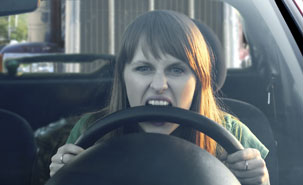
Montreal: Commuting length, distance, and means are stress factors that can lead
to burnout, says Annie Barreck of the University of Montreal's School of
Industrial Relations. “A correlation exists between commuting stress
factors and the likelihood of suffering from burnout. But their
importance varies according to the individual, the conditions in which
their trips take place, and the place where the individual works,” she
explained. Barreck will present her research today at the 83rd congress
of the Association francophone pour le savoir (ACFAS).
Thursday, May 7, 2015
Music in the car is risky for teen drivers
Psychological Science: While it’s well known that using a cell phone while driving is a
recipe for disaster, A study from psychological scientists Warren
Brodsky and Zack Slor of Ben-Gurion University of the Negev found
evidence that the music teens listen to may also have a hazardous
influence on their driving. And it’s not just fiddling with the volume or trying to skip a song
that divert a person’s attention away from the road, the music itself
can interfere with teens’ ability to stay focused on driving. “Drivers underestimate in-car distraction from activities, which are
widely acceptable but not necessarily safe, involving a range of mundane
activities such as simply listening to music,” the researchers write in
the journal Accident Analysis and Prevention.
Wednesday, May 6, 2015
Road traffic crashes – the greatest threat to children’s lives
WHO: The Third UN Global Road Safety Week, taking place on 4–10 May 2015,
focuses on children and road safety and contributes to efforts to halt
the increasing number of road crash deaths and save 5 million lives by
2020. In
the European Region there is no greater threat to the lives of children
aged 5–17 years than a road traffic crash. The likelihood of death from
road traffic injuries among children in low- and middle-income
countries is almost twice as high as among those in high-income
countries. The rapid motorization that has occurred in many countries
has not taken the needs of children into account.
Friday, January 2, 2015
Innate behaviour determines how we steer our car
Chalmers University. Sweden: Researchers at Chalmers have solved a 70 year old mystery in
traffic research: an until now inexplicable jerkiness when we steer a
vehicle. The discovery may lead to safety systems in cars that can
correct dangerous steering movements before they occur.
The ability to predict what a driver is going to do in the near
future and to be able to prepare the car's system for this sounds a
little bit like science fiction, and it would naturally be a dream come
true for the safety departments at car manufacturers. The dream is now
one step closer to becoming reality.
Subscribe to:
Posts (Atom)


