
Showing posts with label heart. Show all posts
Showing posts with label heart. Show all posts
Monday, April 24, 2017
The world’s smallest pacemaker
Monday, February 20, 2017
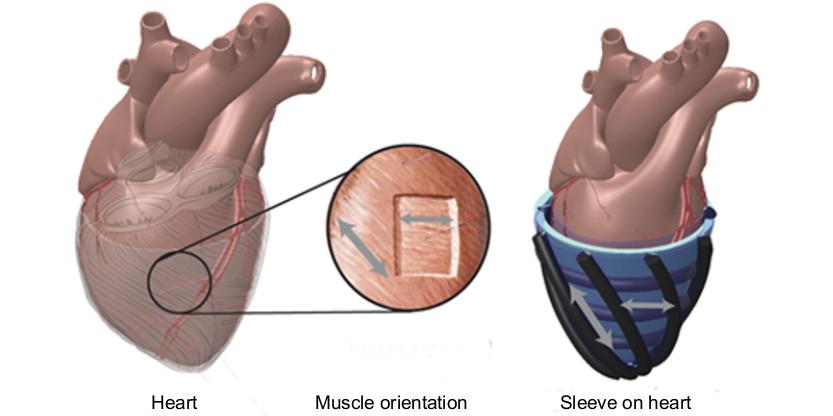
A prototype robotic sleeve to help the heart keep beating
Wednesday, January 4, 2017
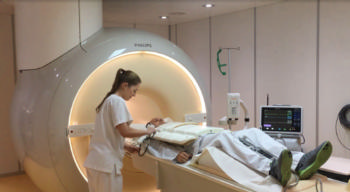
Short-term Sleep Deprivation Affects Heart Function
Friday, November 18, 2016
Food chemical protects the heart

Wednesday, November 16, 2016
Worldwide study reveals new genes for heart function

Monday, November 14, 2016
Scientists find oxidants aren’t always the ‘bad guys’ when it comes to the heart

Monday, June 15, 2015
Most heart muscle cells formed during childhood

Tuesday, April 7, 2015
Growing a heart

Turbo-charging hormone can regrow the heart
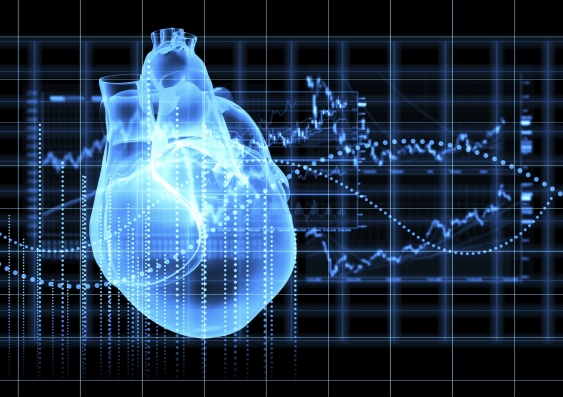
The animal study found it was possible to regenerate muscle cell
numbers in the heart by up to 45%, by ‘turbo-charging’ a hormone called neuregulin, that
helped coordinate cell growth. This is an important step toward repairing a broken heart.
Thursday, March 26, 2015
New Approach to Promote Regeneration of Heart Tissue
 Pennsylvania: The heart tissue of mammals has limited capacity to regenerate after
an injury such as a heart attack, in part due to the inability to
reactivate a cardiac muscle cell and proliferation program. Recent
studies have indicated a low level of cardiac muscle cell
(cardiomyocytes) proliferation in adult mammals, but it is insufficient
to repair damaged hearts.
Pennsylvania: The heart tissue of mammals has limited capacity to regenerate after
an injury such as a heart attack, in part due to the inability to
reactivate a cardiac muscle cell and proliferation program. Recent
studies have indicated a low level of cardiac muscle cell
(cardiomyocytes) proliferation in adult mammals, but it is insufficient
to repair damaged hearts.
Monday, March 16, 2015
Endurance sport causes strain in right side of the heart
.jpg/120px-AMA_(11155318225).jpg)
Thursday, March 5, 2015
Stressed teens risk heart disease, even with exercise
Scimex: British and Swedish scientists have found that the more poorly a person
deals with stress when they are a teen, the more likely they will
develop coronary heart disease later in life. The researchers looked at
over 230,000 men and found the association remained even after they
adjusted the results to take into account physical fitness and other
established heart disease risk factors.
A new way to look at broken hearts
Scimex: Scientists have developed a new way of measuring how information is
communicated as electric signals between cells in the heart, because
conventional electrocardiographs are not able to accurately detect all
the signals in irregularly beating hearts. They say that the success of
the new system suggests that it can be used to "guide development of
clinically useful diagnostic and therapeutic interventions for complex
heart rhythm disorder".
Monday, February 23, 2015
Heart to heart: A Q&A with a Yale cardiologist
Yale University. US: Most people are familiar with chest pain as a symptom of heart attack. What are other signs?
There can be a whole set of other signs. Chest discomfort is the most common. Most people don’t describe it as pain, but as chest pressure or unusual chest discomfort. Other signs include nausea, vomiting, profuse sweating, neck discomfort, arm discomfort or heaviness, and back discomfort.
There can be a whole set of other signs. Chest discomfort is the most common. Most people don’t describe it as pain, but as chest pressure or unusual chest discomfort. Other signs include nausea, vomiting, profuse sweating, neck discomfort, arm discomfort or heaviness, and back discomfort.
Friday, January 23, 2015
Mammalian Heart Regenerative Capacity Depends on Severity of Injury
Children’s Hospital Los Angeles. US: A new study by researchers at Children’s Hospital Los Angeles has shown that neonatal mouse hearts have varying regenerative capacities depending upon the severity of injury. Using cryoinjury – damaging the heart through exposure to extreme cold in order to mimic cellular injury caused by myocardial infarction – investigators found that neonatal mouse hearts can fully recover normal function following a mild injury, though fail to regenerate after a severe injury.
Tuesday, January 20, 2015
Simple model explains complex problems in an ageing heart
Imperial college. UK: Scientists at Imperial College London have
developed a model that helps explain why we are more likely to develop
an abnormal heartbeat with age. The simple mathematical model also suggests why current treatments for the condition are not always successful.
Fight or Fligh Response Control Center for the Heart
Johns Hopkins. US: Discovery in mice aids search for new therapies to stop “racing” heart rates. An animal study led by Johns Hopkins investigators has uncovered what
controls the ability of healthy hearts to speed up in response to
circumstances ranging from fear to a jog around the block.
Wednesday, August 27, 2014
Metabolic syndrome
Metabolic syndrome (MetS) means the presence of multiple risk factors for cardiovascular disease (stroke, hypertension,coronary artery disease...). The report from the american National Cholesterol Education Program’s Adult Treatment Panel III (ATP III) identified 6 components of metabolic syndrome that are related to Cardio Vascular Disease: abdominal obesity, atherogenic dyslipidemia (high triglyceride, high cholesterol), raised blood pressure, insulin resistance (diabetes), glucose intolerance (diabetes), a pro-inflammatory state and a prothrombotic state. MetS increases the risks of atherosclerosis and cardiovascular disease. Some studies have also suggested that it may be related to some gastrointestinal tract diseases, such as fatty liver, nonalcoholic steatohepatitis, and unexplained liver cirrhosis
Friday, June 13, 2014
Healthy heart, healthy brain

Prevention strategies targeting modifiable factors and behaviors are important for reducing risks for cognitive decline and dementia.
Life's Simple 7 is a new metric based on modifiable health behaviors and factors that the American Heart Association uses to promote improvements to cardiovascular health (CVH): nonsmoking, healthy diet, physical activity, and body mass index (BMI), blood pressure (BP), total cholesterol, and fasting glucose.
Compared with low cardiovascular health, intermediate and high levels of cardiovascular health are both associated with substantially lower incidence of cognitive impairment.
Source: American Heart Association
Subscribe to:
Posts (Atom)