Showing posts with label leukemia. Show all posts
Showing posts with label leukemia. Show all posts
Thursday, February 23, 2017
New study into leukemia offers clearer understanding of its biology
Sunday, November 13, 2016
New treatment approach for leukemia renders cancer genes powerless
Thursday, November 3, 2016
Leukaemia study reveals therapy clues
Tuesday, June 23, 2015
Stopping a single enzyme could help treat leukemia

Thursday, June 4, 2015
Idarubicin for treatment of newly diagnosed acute myeloid leukaemia

Tuesday, June 2, 2015
Breastfeeding May Lower Risk of Childhood Leukemia

Sunday, May 31, 2015
Targeted Drug with Chemotherapy Combo Offers Longer Life to Patients with B-cell Cancers
 Mayo Clinic: Because of the significant benefit found in combining the targeted drug ibrutinib with standard chemotherapy for relapsed chronic lymphocytic leukemia (CLL) or small lymphocytic lymphoma (SLL), an interim analysis has closed the international HELIOS phase III clinical trial. Led by Mayo Clinic, researchers found that ibrutinib and chemotherapy
(bendamustine and rituximab, known as BR) reduced the risk of death or
cancer progression by almost 80 percent in patients with previously
treated CLL or SLL, compared to use of BR alone.
Mayo Clinic: Because of the significant benefit found in combining the targeted drug ibrutinib with standard chemotherapy for relapsed chronic lymphocytic leukemia (CLL) or small lymphocytic lymphoma (SLL), an interim analysis has closed the international HELIOS phase III clinical trial. Led by Mayo Clinic, researchers found that ibrutinib and chemotherapy
(bendamustine and rituximab, known as BR) reduced the risk of death or
cancer progression by almost 80 percent in patients with previously
treated CLL or SLL, compared to use of BR alone.Saturday, May 30, 2015
Researchers Connect Haywire Protein to Breast Cancer, Leukemia

Wednesday, April 8, 2015
Scientists discover how to change human leukemia cells into harmless immune cells
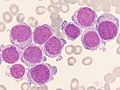
The findings are described in a paper that published online March 16 in the Proceedings of the National Academy of Sciences.
Saturday, March 7, 2015
Chromosomal rearrangement is the key to progress against aggressive infant leukemia
St Jude: The St. Jude Children’s Research Hospital—Washington University
Pediatric Cancer Genome Project reports that a highly aggressive form of
leukemia in infants has surprisingly few mutations beyond the
chromosomal rearrangement that affects the MLL gene. The
findings suggest that targeting the alteration is likely the key to
improved survival. The research appeared online ahead of print this week
in the scientific journal Nature Genetics.
Saturday, February 28, 2015
Researchers Detail Reasons for Ibrutinib Therapy Discontinuation in Chronic Lymphocytic Leukemia
Ohio University. US: About 10 percent of patients with chronic lymphocytic leukemia
(CLL) discontinued therapy with the Bruton tyrosine kinase (BTK)
inhibitor drug ibrutinib because of disease progression during clinical
trials, according to a study published online by JAMA Oncology.
Healthy older adults carry leukaemia mutations
NHS. UK: BBC News reports that, according to researchers, “It is ‘almost
inevitable’ that your blood will take the first steps towards leukaemia
as you age”. Researchers analysed the blood of 4,219 people, looking for DNA errors (mutations) linked to blood cancers (leukaemia).
Leukaemia-associated mutations almost inevitable as we age
Sanger Institute. UK: Researchers estimate that 7 in 10 over 90-year-olds harbour cells with early leukaemia mutation. It is almost inevitable that we will develop genetic mutations associated with leukaemia as we age, according to
research published today in Cell Reports. Based on a study of 4219 people without any evidence of blood
cancer, scientists estimate that up to 20 per cent of people aged 50-60 and more than 70 per cent of people over 90
have blood cells with the same gene changes as found in leukaemia.
Innovative approach to assessing effectiveness of anti-cancer drugs
Manchester University (UK) scientists have a developed a new method to monitor the
effect of anti-cancer drugs on very rare leukaemia stem cells. The
approach potentially allows doctors to screen patients and personalise
their treatment.
Tuesday, February 24, 2015
Inherited gene variation leaves young leukemia patients at risk for peripheral neuropathy
St Jude Hospital. US: Researchers have identified the first genetic variation that is
associated with increased risk and severity of peripheral neuropathy
following treatment with a widely used anti-cancer drug. Investigators
also found evidence of how it may be possible to protect young leukemia
patients without jeopardizing cures. St. Jude Children’s Research
Hospital scientists led the study, which appears today in the Journal of the American Medical Association.
T-cell therapy clinical trial now offered to cancer patients at C.S. Mott Children’s Hospital
Michigan University. US: Innovative treatment uses patient’s own immune cells against acute lymphoblastic leukemia. A clinical trial using T-cell therapy that uses the
patients’ own immune cells to hunt down cancer cells is now being
offered at the University of Michigan’s C.S. Mott Children’s Hospital.
Tuesday, February 17, 2015
Young Adult Survivors Most Distressed After Leukemia and Lymphoma Treatment
Colorado University. US: Two University of Colorado Cancer Center studies published in the Journal of Psychosocial Oncology
show that young adult survivors (ages 18-39) of leukemia and lymphoma
are more likely to report high distress than older survivors (ages 65+).
Wednesday, February 11, 2015
Computer model of blood development could speed up search for new leukaemia drugs
Cambridge University. UK: The first comprehensive computer model to simulate the development of blood cells could help in the development of new treatments for leukaemia and lymphoma, say researchers at the University of Cambridge and Microsoft Research.
Tuesday, January 27, 2015
Protein-based Therapy Shows Promise against Resistant Leukemia
Children's Hospital Los Angeles. US: Resistance of leukemia cells to contemporary chemotherapy is one of the most formidable obstacles to treating acute lymphoblastic leukemia (ALL), the most common form of childhood cancer. Now researchers at Children’s Hospital Los Angeles (CHLA) have designed and developed a new protein-based therapy they believe will prove highly effective against drug-resistant leukemia cells. It may also amplify the potency of standard treatment options such as chemotherapy and radiation therapy.
Thursday, January 22, 2015
Added benefit of idelalisib is not proven
IQWIG. Germany: Idelalisib (trade name Zydelig) has been available since September 2014 for patients with follicular lymphoma or chronic lymphocytic leukaemia (CLL). The German Institute for Quality and Efficiency in Health Care (IQWiG) examined in a dossier assessment whether this drug offers an added benefit over the appropriate comparator therapy. According to the findings, such an added benefit is not proven for any of the two therapeutic indications because the drug manufacturer presented no suitable data.
Subscribe to:
Posts (Atom)