Showing posts with label epigenetics. Show all posts

Wednesday, November 16, 2016

Scientists uncover genetic evidence that ‘we are what we eat’


Oxford: Researchers at the University of Oxford have demonstrated that the diets of organisms can affect the DNA sequences of their genes. In a study on two groups of parasites, the team detected differences in DNA sequences that could be attributed to the composition of their food. The results are published in the journal Genome Biology. Study co-author Dr Steven Kelly, from Oxford’s Department of Plant Sciences, said: ‘Organisms construct their DNA using building blocks they get from food. Our hypothesis was that the composition of this food could alter an organism’s DNA. For example, could a vegetarian panda have predictable genetic differences from a meat-eating polar bear?

Sunday, November 13, 2016

New treatment approach for leukemia renders cancer genes powerless
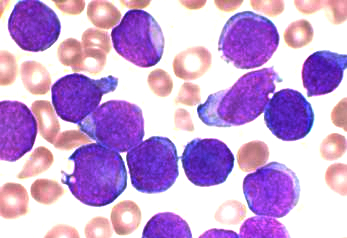
Mainz: In leukemia cells it is often the case that genes are reactivated that, in physiological terms, mediate the self-renewal of blood stem cells. In a common subtype of acute myeloid leukemia, this abnormal activation of such self-renewing genes is apparently caused by structural modifications of the DNA packaging. In turn, these modifications are caused by two specific proteins of the so-called chromatin regulator group, on which leukemia cells are dependent. These discoveries were made by oncologist Dr. Michael Kühn from the Department of Internal Medicine III, which is a part of the University Center for Tumor Diseases (UCT) at the Mainz University Medical Center, in a collaborative effort with researchers from the Memorial Sloan-Kettering Cancer Center in New York and Harvard University in Boston.

Saturday, October 29, 2016

Discovery Reveals a Key Mechanism of Non-Genetic Inheritance

Maryland: The basics of genetic inheritance are well known: parents each pass half of their DNA to their offspring during reproduction. This genetic recipe is thought to contain all of the information that a new organism needs to build and operate its body. But recent research has shown that, in some species, parents’ life experiences can alter their offspring. Being underfed, exposed to toxins or stricken by disease can cause changes in a parent’s gene expression patterns, and in some cases, these changes can be passed down to the next generation. However, the mechanisms that cause this effect—known as non-genetic inheritance—are a mystery.

Friday, June 5, 2015

Music of the genome hits a discord with autism

TheConversation: We still do not know what causes autism, but insights from the burgeoning field of epigenetics are helping to reveal the subtle factors that can contribute to the disorder. Autism spectrum disorder (autism for short) is a term that describes a diverse set of conditions, including problems with social communication, social interaction and repetitive/restrictive behaviours. It affects around one in 135 children under 7, and is four times more common in males than females.

Saturday, May 2, 2015

DNA modification raises possibility of new carrier of heritable epigenetic information

Immunofluorescence shows C. elegans eggs: DNA in blue and a previously unreported DNA modification where adenines are methylated in red. Image: David Aristizábal-Corrales
Harvard: We are more than the DNA sequences we inherit from our parents. Nongenetic information is also passed from one generation to the next, the burgeoning field of epigenetics tells us. If parents or grandparents live with some altered state of health that is not the direct result of their genetic code, their descendants may experience that condition to some degree themselves, as if they bear some ancestral memory.

Thursday, April 16, 2015

DNA changes in sperm may help explain autism

NHS: "DNA changes could explain why autism runs in families, according to study," The Independent reports. Research suggests a set of changes in a father's DNA – known as methylation – is linked to autism spectrum disorder (ASD) in their offspring. Methylation is a chemical process that can influence the effects of genes on the body (gene expression), essentially turning off certain genes. This process can lead to both positive and negative changes in DNA. These types of changes are known as epigenetic changes. In this small study of 44 men and their offspring, researchers scanned for epigenetic changes at 450,000 points on the DNA molecule. They compared the DNA results with the child's score on an ASD prediction test at one year of age, and then looked for regions of DNA where changes were linked to a higher or lower risk of ASD. The researchers found 193 areas of DNA from the men's sperm where methylation levels were associated with a statistically significant increased risk of developing ASD.

Friday, March 6, 2015

What’s stress got to do with it? How trauma-induced changes to gene function can lead to psychosis

UNSW. Australia: Childhood trauma is understood to be a significant risk factor for developing a psychotic or mood disorder later in life. But how does this trauma change our brain’s stress response systems and contribute to mental ill-health?