
Showing posts with label brain concussion. Show all posts
Showing posts with label brain concussion. Show all posts
Thursday, May 10, 2018
Researchers identify blood biomarkers that may help diagnose, confirm concussions
Sunday, March 12, 2017
Biomarker in blood may help predict recovery time for sports concussions
NIH: Researchers at the National Institutes of Health found that the blood
protein tau could be an important new clinical biomarker to better
identify athletes who need more recovery time before safely returning to
play after a sports-related concussion. The study, supported by the
National Institute of Nursing Research (NINR) with additional funding
from the Eunice Kennedy Shriver National Institute of Child Health and
Human Development (NICHD), published online in the Jan. 6, 2017 issue of Neurology (link is external), the medical journal of the American Academy of Neurology.
Saturday, October 29, 2016
Brain Changes Seen in Youth Football Players Without Concussion

Saturday, October 22, 2016
Concussions are Treatable, More Research Needed
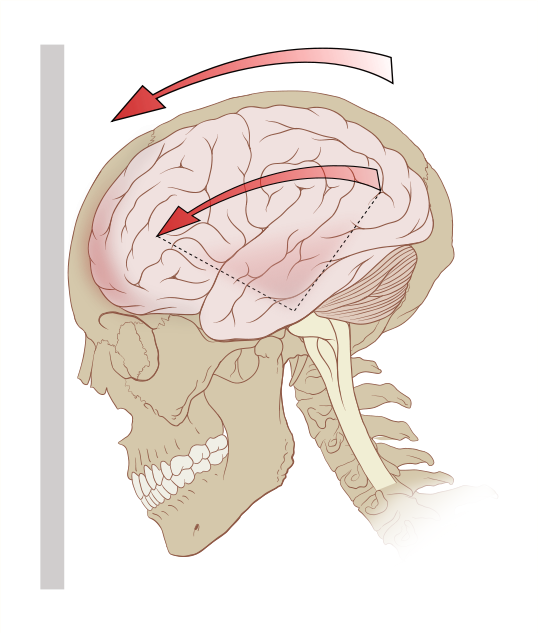
In October, 2015, leading concussion clinicians and researchers
gathered at UPMC in Pittsburgh for the “Targeted Evaluation and Active
Management” (TEAM) symposium, an unprecedented meeting and white paper
designed to propose and share nationally the participants’ agreement on
the best practices, protocols and active therapies for treating
concussions.
Tuesday, June 16, 2015
Brain Injury Patterns Linked to Post-concussion Depression and Anxiety
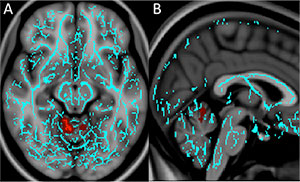
Post-concussion psychiatric disorders like depression, anxiety and irritability can be extremely disabling for those among the nearly 3.8 million people in the United States who suffer concussions every year. The mechanisms underlying these changes after concussion—also known as mild traumatic brain injury—are not sufficiently understood, and conventional MRI results in most of these patients are normal.
Friday, May 29, 2015
Study explores development of epilepsy after brain injury

Newcastle: Scientists at Newcastle University will carry
out a pioneering study to look at the development of epilepsy following
a serious brain injury. Epilepsy can be triggered after traumatic
brain damage such as a stroke, head trauma and some infections, yet
no-one knows why some people go on to develop the life-threatening
condition and others do not. A team at Newcastle University has now been awarded more than £147,000 from leading charity, Epilepsy Research UK, to study epileptogenesis – a term used to describe how epilepsy arises after an injury to the brain.
Friday, May 22, 2015
Combining impact sensors with blood samples to determine the effects of concussion on rugby players
 London: A team of UCL researchers have joined
the ongoing Saracens study for the 2015/16 season, which combines impact
sensors with blood samples to determine the effects of concussion on rugby
players. In January, following an approach from
James Drake of The Drake Foundation to set up a research project to study the
effects of concussion, Saracens players began wearing impact sensors produced
by X2 Bio-systems in Seattle which measure the force and direction of impact to
the head. The Drake Foundation have now extended
the funding of the study so that from the start of the new Aviva Premiership
season, players’ blood samples will be analysed to detect biomarkers associated
with brain injury.
London: A team of UCL researchers have joined
the ongoing Saracens study for the 2015/16 season, which combines impact
sensors with blood samples to determine the effects of concussion on rugby
players. In January, following an approach from
James Drake of The Drake Foundation to set up a research project to study the
effects of concussion, Saracens players began wearing impact sensors produced
by X2 Bio-systems in Seattle which measure the force and direction of impact to
the head. The Drake Foundation have now extended
the funding of the study so that from the start of the new Aviva Premiership
season, players’ blood samples will be analysed to detect biomarkers associated
with brain injury.Monday, May 4, 2015
Study Examines Incidence of Concussion in Youth, High School, College Football

Saturday, May 2, 2015
Women Show Persistent Memory Impairment after Concussion

Wednesday, April 8, 2015
Study finds characteristic pattern of protein deposits in brains of retired NFL players who suffered concussions

Wednesday, March 25, 2015
Head injury patients show signs of faster ageing in the brain
Imperial College: People who have suffered serious head injuries
show changes in brain structure resembling those seen in older people,
according to a new study. Researchers at Imperial College London analysed
brain scans from over 1,500 healthy people to develop a computer program
that could predict a person’s age from their brain scan. Then they used
the program to estimate the “brain age” of 113 more healthy people and
99 patients who had suffered traumatic brain injuries.
More research needed on brain damage in American football
Tuesday, March 3, 2015
Cerebral Blood Flow as a Possible Marker for Concussion Outcomes
JAMA: A new imaging study suggests that cerebral blood flow recovery in the
brain could be a biomarker of outcomes in patients following
concussion, according to a study published online by JAMA Neurology.
Wednesday, February 4, 2015
Repeated head blows linked to smaller brain volume and slower processing speeds
British Medical Journal: Repeated blows to the head sustained
during serial boxing or martial arts tournaments are linked to smaller
volumes of certain parts of the brain and slower processing speeds,
reveals research published online in the British Journal of Sports Medicine.
Tuesday, January 27, 2015
Study of Former NFL Players Reveals Specifics of Concussive Brain Damage
Johns Hopkins. US: A team of Johns Hopkins specialists, using a battery of imaging and
cognitive tests, has gathered evidence of accumulated brain damage that
could be linked to specific memory deficits in former National Football
League (NFL) players experienced decades after they stopped playing the
game.
Wednesday, January 21, 2015
High School Football Players Show Brain Changes after One Season
Radiological Society North America. US: High school football players may develop impact-related brain changes over the course of a single season.
Players who experience higher levels of head impacts show the most changes, even in the absence of concussion.
It remains unclear whether or not these changes will be associated with any negative long-term consequences.
Subscribe to:
Posts (Atom)