Berkeley: Every few seconds, our eyelids automatically shutter and our eyeballs
roll back in their sockets. So why doesn’t blinking plunge us into
intermittent darkness and light? New research led by UC Berkeley shows that the brain works extra hard to stabilize our vision despite our fluttering eyes. Scientists at UC Berkeley, Nanyang Technological University in
Singapore, Dartmouth College and Université Paris Descartes have found
that blinking does more than lubricate dry eyes and protect them from
irritants.
Only good, independent and reliable information about health from experts.
Showing posts with label eye. Show all posts
Thursday, February 16, 2017
Friday, December 23, 2016
Study shows need for improved, stable eye screening of premature babies
Thursday, November 24, 2016
New Visual Symptoms Following LASIK Surgery
JAMA: In a study published online by JAMA Ophthalmology, Malvina
Eydelman, M.D., of the U.S. Food and Drug Administration, Silver Spring,
Md., and colleagues examined the frequency of patient-reported visual
symptoms, dry eye symptoms, satisfaction with vision, and satisfaction
with laser insitu keratomileusis (LASIK) surgery in the Patien
Wednesday, July 1, 2015
Bow ties and cuttlefish: researchers gain new insight into a human visual super sense
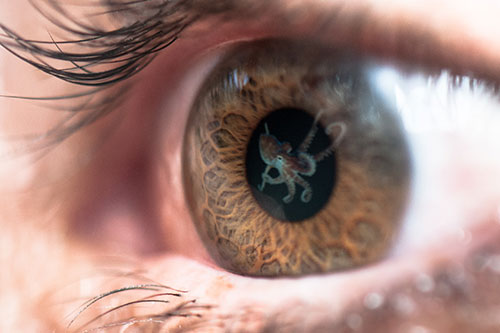
Bristol: An experiment originally designed to test the visual abilities of octopuses and cuttlefish has given University of Bristol researchers an unprecedented insight into the human ability to perceive polarized light – the super sense that most of us don’t even know we have. We are all familiar with colour and brightness, but there is a third property of light, the ‘polarization’, which tells us the orientation in which the light waves are oscillating.
Polarised light and the super sense you didn’t know you had
TheConversation: Ever fancied having a superpower? Something you can call upon when you need it, to hand you extra information about the world? OK, it’s not X-ray vision, but your eyes do have abilities that you might not be aware of. We are all familiar with colour and brightness, but there is a third property of light – the “polarisation” that tells us the orientation in which light waves are oscillating. Animals, like bees and ants, use the polarisation patterns in the sky as a navigation aid. But few people, even in the scientific community, are aware that humans can perceive the polarisation of light with the naked eye.
Wednesday, May 13, 2015
How neurons find their way from the retina to the inner brain
Johns Hopkins: Just as most cameras now have an autostabilization feature to compensate
for movement during picture taking, our eyes execute an imperceptible
reflex that prevents our vision from blurring when we, or our field of
vision, are in motion. But before the reflex can work, the wirelike
projections, or axons, of specialized nerve cells must find their way from the retina to the correct part of the brain during embryonic development. New research, published online May 7 in the journal Neuron,
describes how those axons find their way through the brain’s maze of
neurons to make the right connection. The finding has implications for
treatment of eye movement disorders and regeneration of damaged
vision-sensing nerve cells.
Subscribe to:
Posts (Atom)
