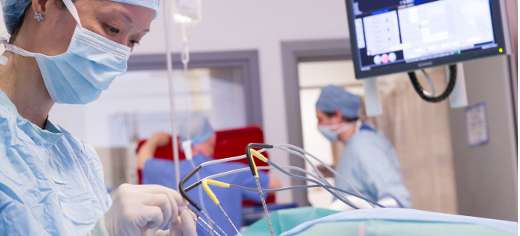
A UK first, the technique requires special ‘nanoknife’ needles to be inserted with pinpoint accuracy into the tumour at an optimum distance apart. CT scanning is used during the procedure to check the needles are in the right place and ensure that nearby delicate organs are not damaged.
Once the needles are in position, pulses of electricity punch ‘nanoholes’ in the tumour to destroy its cells in a procedure that takes about an hour.
Dr Wah commented: “With the type of tumour Alan had the options for conventional treatment using heat or ice based energy was unsuitable and may destroy the kidney due to its location. The availability of this new nanoknife or IRE technology have revolutionised the way we can offer treatment to the tumour and prolong the life of his kidney.
“The procedure went to plan and if anything took less time than I expected considering this is the first time I have used this technique. Alan recovered well as was able to go home the next day and there is every indication the procedure has been successful, but we will be reviewing him closely.
“I am very pleased that we are now able to use this nanoknife technology to add to the range of treatment options available here in the Leeds Cancer Centre at St James's University Hospital for these types of tumours.”